


Praise him with trumpet sound; praise him with lute and harp!
Praise him with tambourine and dance; praise him with strings and pipe!
Praise him with sounding cymbals; praise him with loud clashing cymbals!
Let everything that has breath praise the Lord! Praise the Lord!
Psalm 150:3-6 (ESV)
AN EXHIBIT AT THE BACHHAUS MUSEUM
We were touring the city of Eisenach, in Germany, the city of Bach’s birth. The Bachhaus Museum is located in the home that Bach’s family once called home. The museum includes hundreds of items related to Bach his work and his family. A new section, built in 2007, includes some multimedia exhibits, including one that interested me greatly and, I believe, speaks to some of the challenges Lutheran Christians have with music, especially new genres of music.
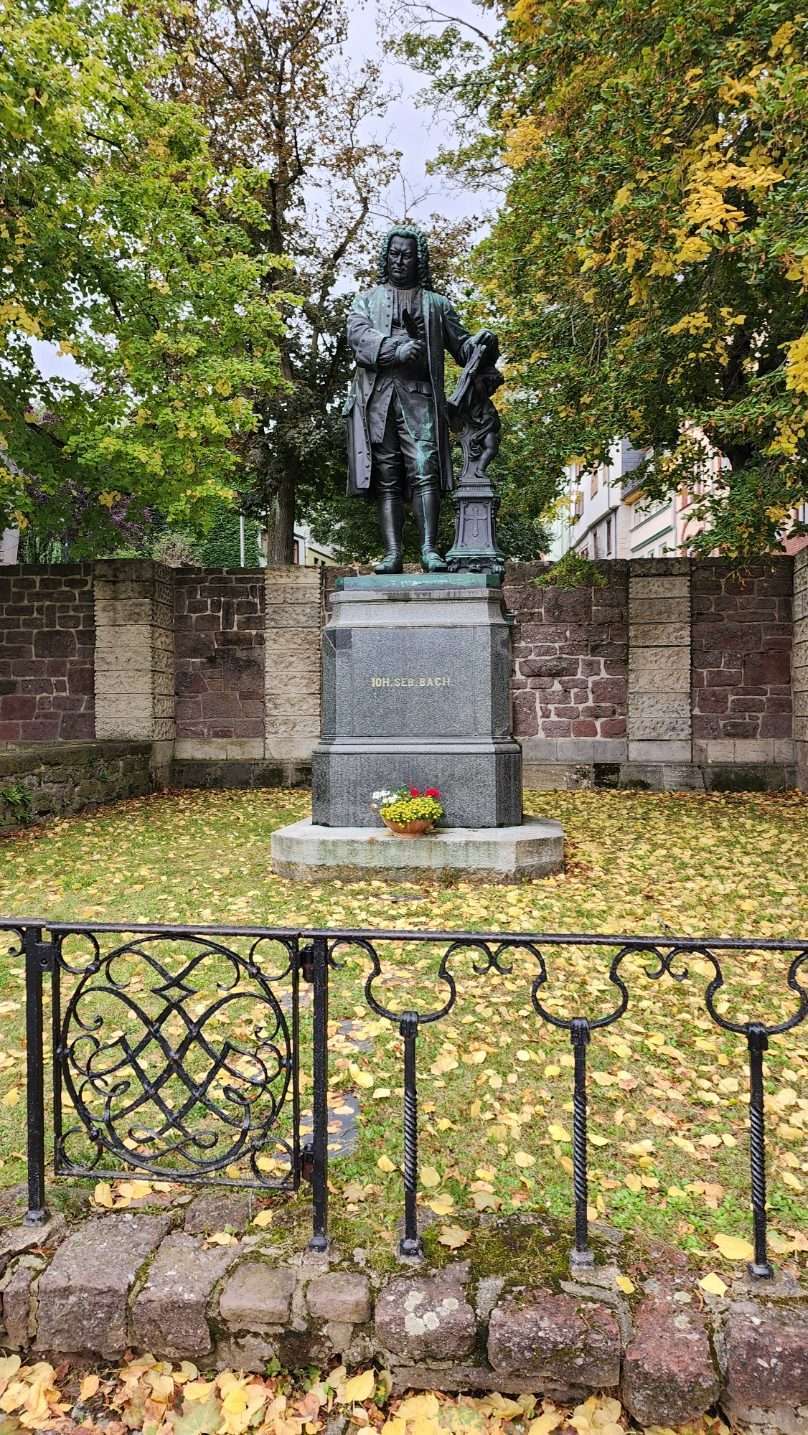 Evidently when Bach became the Cantor at St. Thomaskirche in Leipzig (1723) – the position for which he is best known and at which he composed the largest amount of his music – the city council insisted on a very “traditional” style of music. They were having their version of “worship wars” in Germany. Some were introducing some extremely dramatic styles of music drawn, in large part, from the secular styles of music at the time.
According to one exhibit at the Bachhaus, when Bach prepared his “Passions” (a musical re-telling of the story of Christ’s Passion and death, he blended the traditional style complete with familiar chorales (hymns) sung by the congregation with a new “style,” replete with dramatic arias, duets, and trios. They remain some of Bach’s best and most well-known works.
One of the reasons for doing this (according to the exhibit) was that worshippers were being drawn away to “secondary” parishes that had adopted this new style of dramatic music, compared to the more traditional chorales and cantatas. Sound familiar?
The exhibit continued by noting that by blending the two styles Bach drew in BOTH groups of people … those who appreciated the traditional hymns and those who enjoyed the new, more secular-sounding songs. Bach was extremely successful at satisfying the needs of the “traditionalists” while drawing on more “contemporary” sounds for the church’s music. Sound familiar?
BLENDING MUSIC STYLES
Most don’t compare Bach’s music to the praise and worship (aka contemporary) music that is part of our congregation’s music ministry. But the exhibit got me thinking more positively concerning “blending” the old and new, of finding familiar hymn tunes that also include a praise refrain. Or finding new settings of older hymns similar to what Nathan Drake is doing through Reawaken Hymns.
Bach’s genius was NOT displayed in throwing out the traditional chorales OR in introducing only new and different ones. It was seen in finding the BEST of what music could offer and using that in the service of praise to God.
Read more from St. John's
Save the date: Family Reunion Sunday
Check out the plan for the Family Reunion Sunday on August 30th, beginning with worship at 10am. To check how you can help, the list of needed volunteers is also included here.

Blood Drive at St. John’s
Sign up now to donate blood on Family Reunion Sunday, as the American Red Cross has declared a national blood crisis and faces an emergency shortage.
Interviews Beginning for the Associate Pastor Call Process
The Call Process is moving forward as four names have been selected to be interviewed. More information on the plans for that interview process are shared here. If you would like to attend the…

The Story of the Stained Glass
Check out this series of articles describing the teachings behind the stained glass windows at St. John’s! This month, Pastor shares the meaning behind a small group of the disciples.