


A series of articles describing the meaning and teachings behind the stained glass windows at St. John’s:
The Clerestory windows (lecturn side) PRAEPARATIO EVANGELICA: The Preparation for the Gospel, 12 Sons of Israel (Part 1)
Which came first, a building design that included 12 clerestory windows on each side of the sanctuary, or the idea to honor both the 12 sons of Israel and the 12 disciples in stained glass? Whether in this case form followed function or the other way around, we receive the benefit!
For the most part the imagery for these windows are drawn from Genesis 49 when Jacob (Israel) blesses his 12 sons. This month let’s take a look at the first half of these windows.
NOTE: “Clerestory” are the higher section of walls on either side of the sanctuary above the pews. These 12 are to the left as you walk into the sanctuary from the rear.
From back to front:
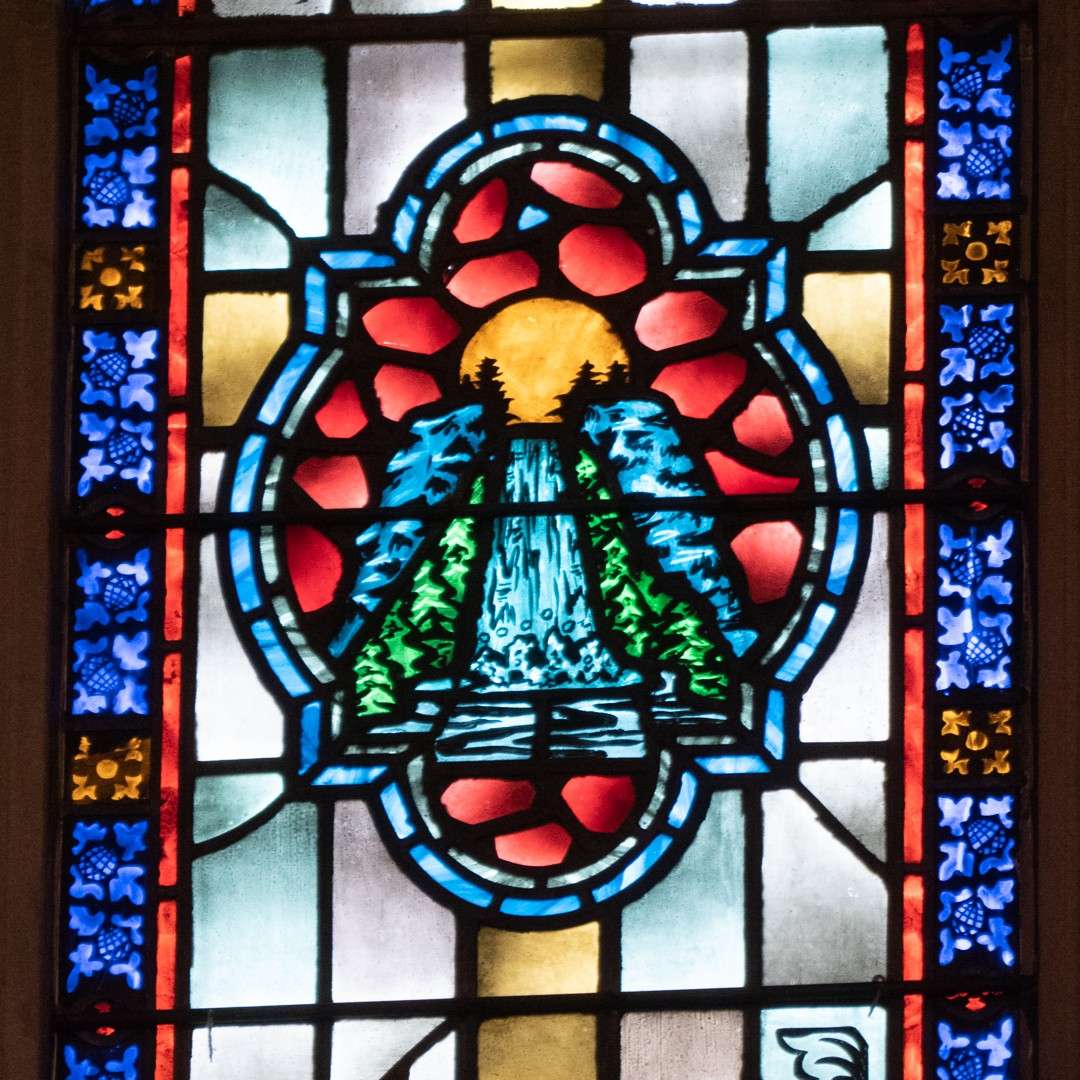
REUBEN: (רְאוּבֵן) was “unstable as water” since he was often held in high regard by his father, especially since he convinced his brothers not to kill Joseph (Gen. 37:21-22) but is remembered also for an egregious sin (Gen. 35:22).
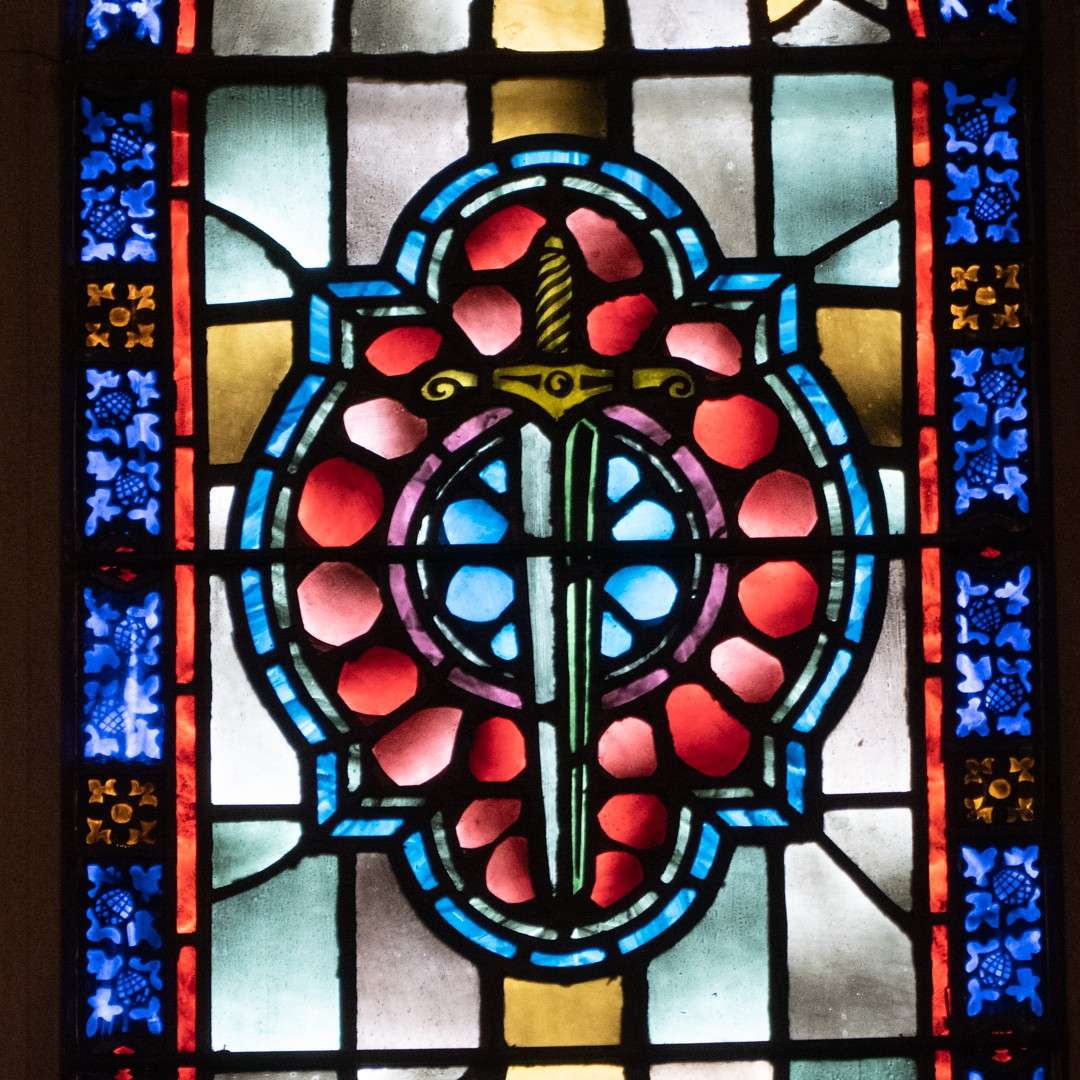
SIMEON:(שִׁמְעוֹן) In his death-bed blessing, Israel remembers that Simeon and Levi sought vengeance on the people of Shechem because the prince for whom the land is named had defiled their sister Dinah (Genesis 34:25). As a result, the other people of the land despised Jacob because of it. He also plays a key role in the story of how Joseph’s brothers end up safe in Egypt (Genesis 42).
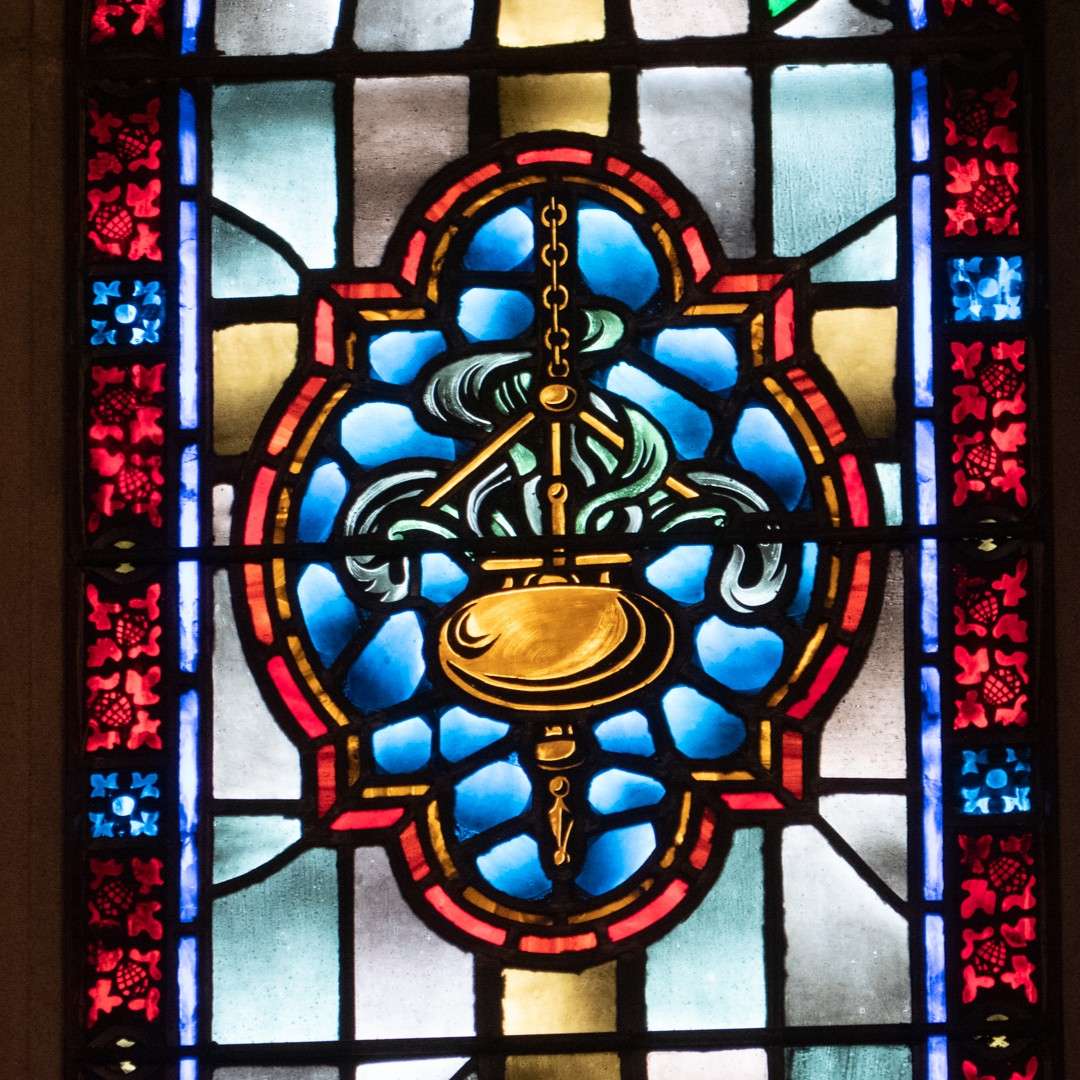
LEVI: (לֵוִי) The Tribe of Levi served particular religious duties. In return, the landed tribes were expected to give tithes to the priests working in the Temple in Jerusalem. Because of this, the tribe of Levi was allotted no land in the promised land when the people of Israel returned (Joshua 13:33).
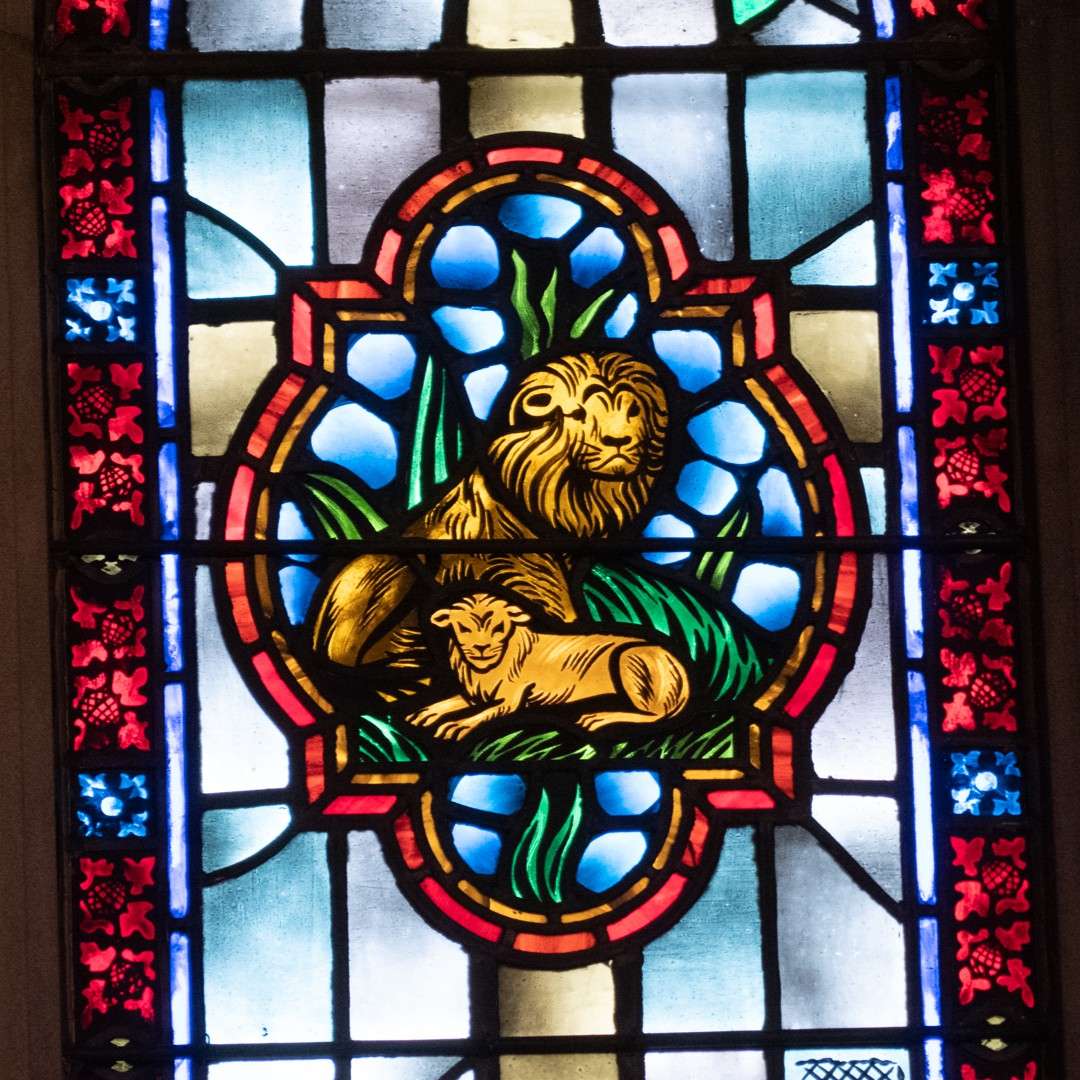
JUDAH: (יְהוּדָה) Judah literally means “to thank” or “praise”. In his death-bed blessing Israel foretells the prominence of Judah from whom would come King David and, eventually, the “lion of Judah” (Revelation 5:5), Jesus Christ. It was Judah’s idea to sell their brother Joseph to the Ishmaelites as a slave rather than to kill him (Genesis 37:25-28).
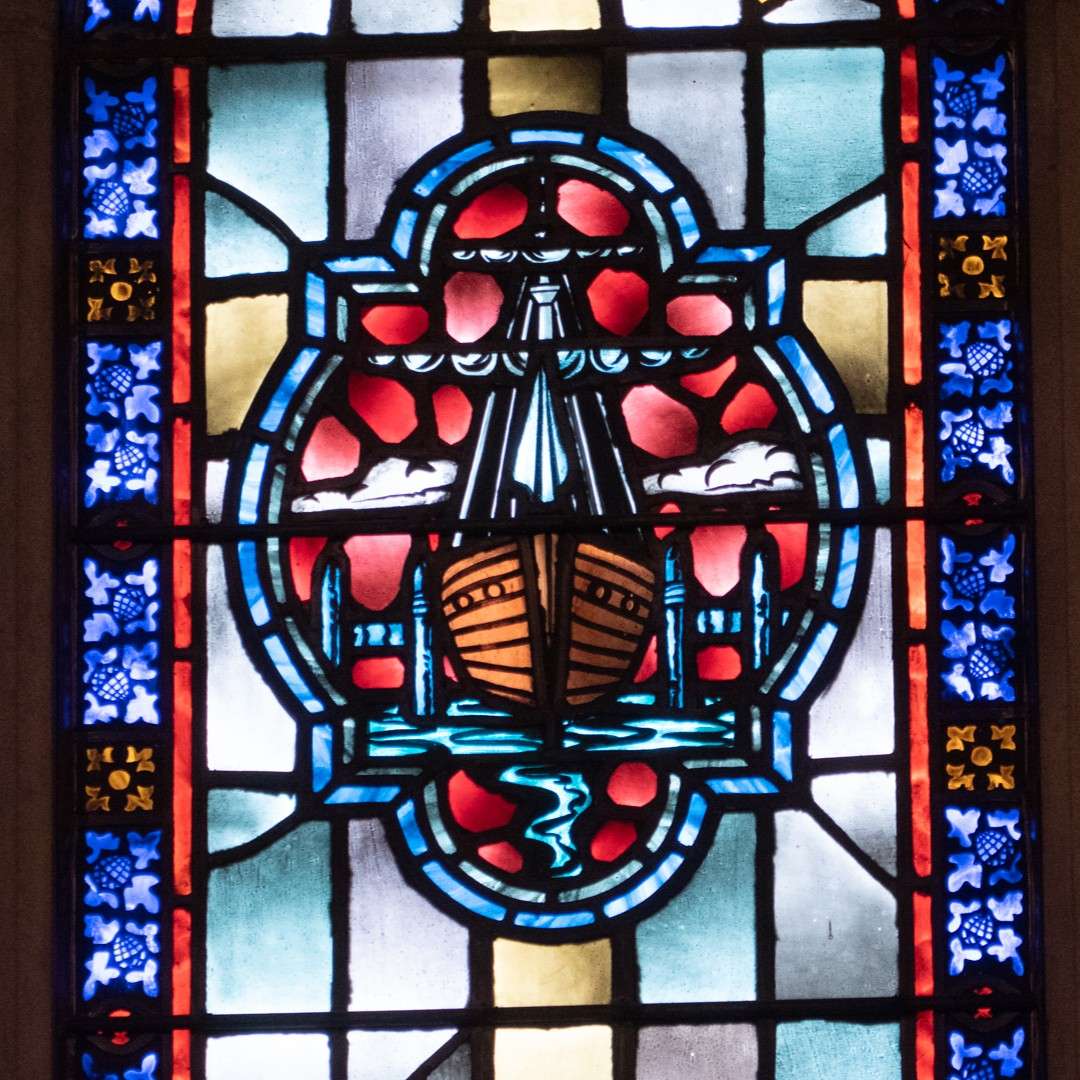
ZEBULUN: (זְבוּלֻן) Israel’s death-bed blessing foretells the eventual portion of the land that will be provided to his tenth son (Leah’s sixth and last, according to the order of Genesis 29-30). This land will be near the Mediterranean, bordering the land of Phoenicia which is on the sea itself. Leah’s name for Zebulun (literally “honor”) indicates her desire that, finally, her husband will honor her now that she has given him six sons. The order in Genesis 49 is different from the birth order in Genesis 29-30.
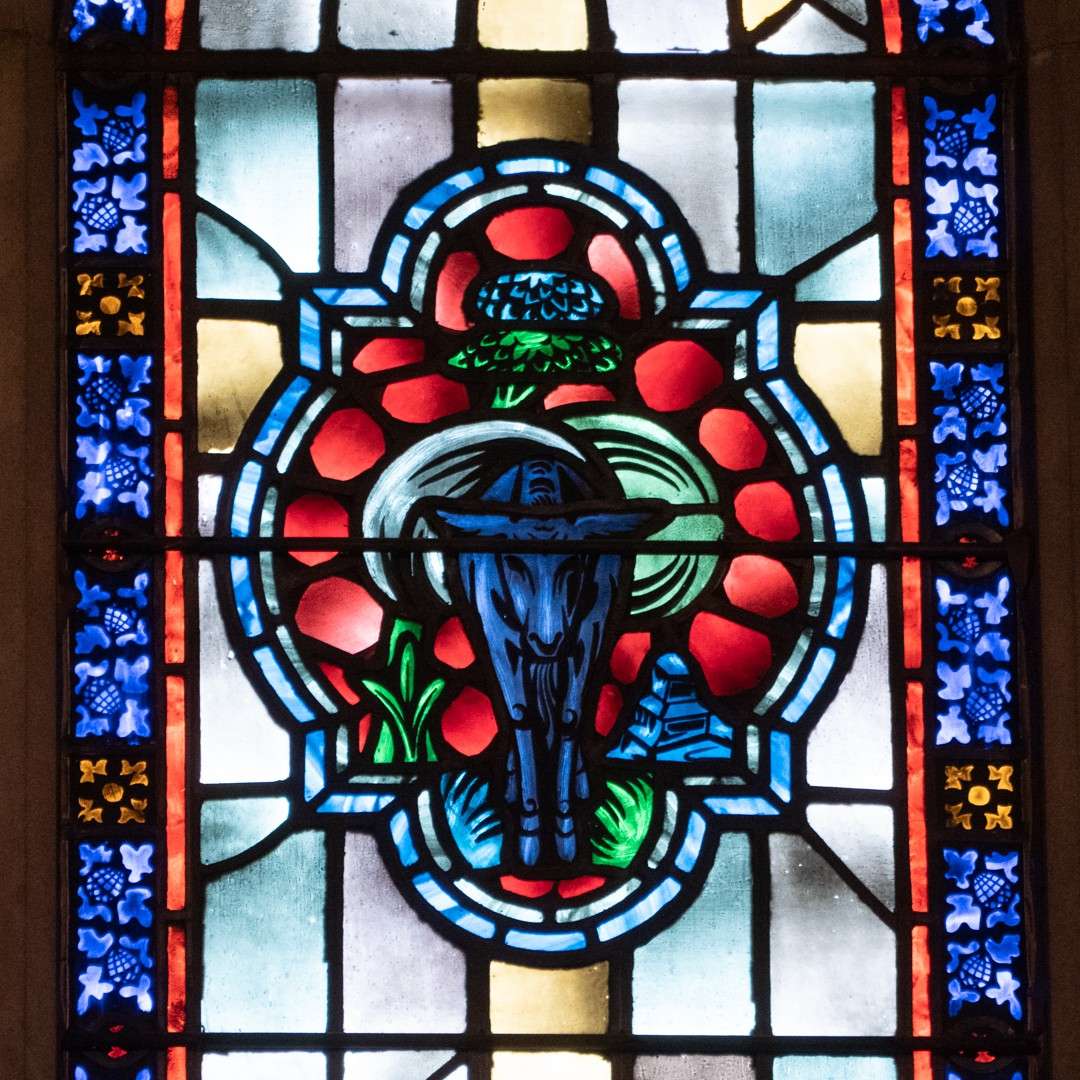
ISSACHAR: (יִשָּׂשכָר) Issachar (literally “wages” or “reward”) is named by Leah because Israel lay with her after having provided her son’s mandrakes to Rachel (Genesis 30:14-18). The symbol of the beast of burden refers either to this tribe’s bearing the burden of the study of the Torah with a significant number of religious scholars. Or, their location as those who would transport goods across their land between the Mediterranean and the Sea of Galilee.
Next month: Clerestory windows (lecturn side) PRAEPARATIO EVANGELICA: The Preparation for the Gospel, 12 Sons of Israel (Part 2)
Read more from St. John's
Save the date: Family Reunion Sunday
Check out the plan for the Family Reunion Sunday on August 30th, beginning with worship at 10am. To check how you can help, the list of needed volunteers is also included here.

Blood Drive at St. John’s
Sign up now to donate blood on Family Reunion Sunday, as the American Red Cross has declared a national blood crisis and faces an emergency shortage.
Interviews Beginning for the Associate Pastor Call Process
The Call Process is moving forward as four names have been selected to be interviewed. More information on the plans for that interview process are shared here. If you would like to attend the…

The Story of the Stained Glass
Check out this series of articles describing the teachings behind the stained glass windows at St. John’s! This month, Pastor shares the meaning behind a small group of the disciples.